
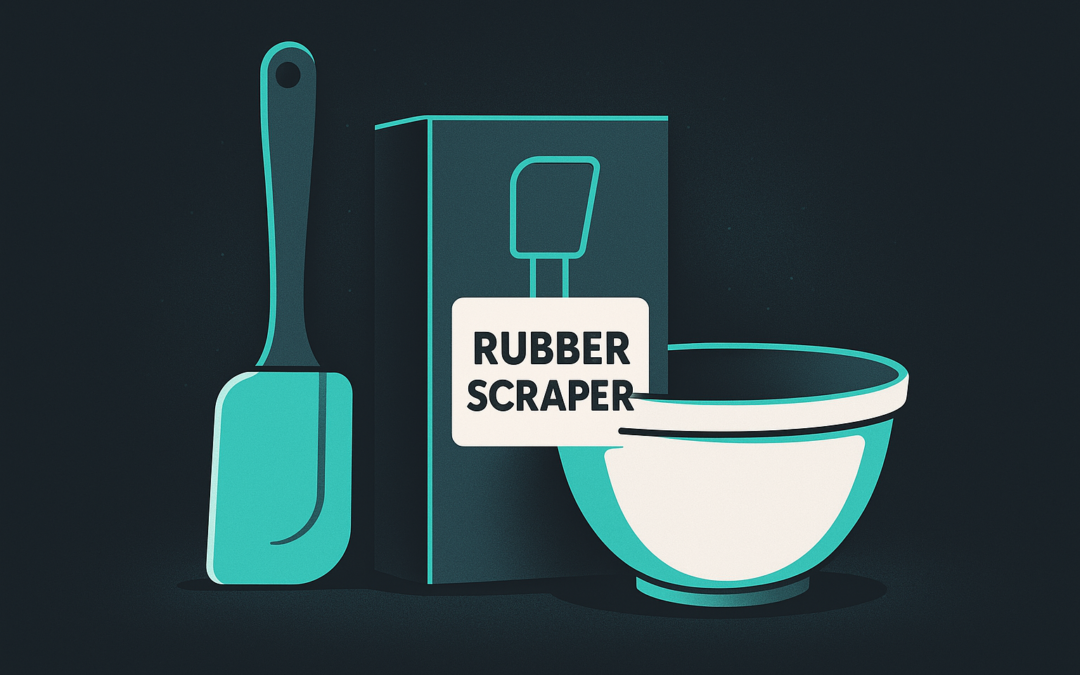
The Humble Rubber Scraper: A Kitchen Essential with Surprising Depth
There are a handful of tools that quietly earn their spot in the kitchen drawer—used daily, rarely celebrated, indispensable. The rubber scraper fits perfectly into this category. If you’re picturing the classic spatula-shape, you’re on the right track. But as rubber scraper history reveals, this unassuming utensil has evolved in ways that reflect not just changes in material science, but also our shifting relationship to cooking itself.
A Brief History: From Simple Tool to Design Icon
The original rubber scraper was, quite literally, made of rubber—an innovation that dates back to a time when bakers needed a way to coax the last bit of batter from bowls. Early versions were simple, flexible, and a little bit awkward. Their invention coincided with the rise of home baking in the early 20th century, and they quickly became a fixture in American kitchens. Fast-forward to the present, and the material has largely shifted to silicone—safer for high temperatures, easier to clean, and more durable.
What Makes a Rubber Scraper Special?
On the surface, it’s just a spatula with a flexible edge. But the magic of the rubber scraper is in the details. Unlike a wooden spoon or a metal whisk, the rubber scraper is uniquely suited for tasks that require precision and care: scraping every last bit of cookie dough from a mixing bowl, folding egg whites into batter, or spreading frosting with a controlled swipe. The blade’s flexibility matters. It bends and adapts to the contours of your bowl, leaving nothing behind—a quiet nod to both thrift and craftsmanship. The handle, too, has evolved: ergonomic shapes, textured grips, and clever heat-resistant cores.
Material Matters: Why Silicone Took Over
It’s worth pausing on the shift from natural rubber to silicone. Rubber was great in its day, but anyone who’s ever left an old scraper near a hot pan knows its limitations. Silicone, by contrast, is heat-resistant (usually up to 600°F), non-reactive, and doesn’t retain odors or stains. It can go from mixing bowl to frying pan, from hot caramel to cold whipped cream, without breaking a sweat. And because silicone is less porous, it’s a safer bet for food safety—no crevices for bacteria to hide in.
Design Evolution: Form Meets Function
The best rubber scrapers today don’t just borrow from the past—they improve on it. Many modern versions feature a seamless design, eliminating the traditional “head and handle” joint where batter loves to collect. Some offer dual-textured edges: one side soft and flexible for scraping, the other firmer for mixing or stirring. The dimensions are tailored for specific tasks—a narrow blade for jars, a broad one for sheet pans. Color isn’t just aesthetic, either; it can help you keep tools separate for sweet and savory jobs, or signal which are safe for high-heat use.
Beyond Baking: Unexpected Uses
While the rubber scraper is a baker’s best friend, its utility doesn’t stop at sweets. Use it for scrambling eggs, sautéing vegetables, or smoothing sauces. The scraper is gentle enough for nonstick pans, essential for delicate batters, and tough enough to mix dense doughs. Some home cooks even keep a dedicated scraper for cleaning out jars—because who hasn’t battled the last tablespoon of peanut butter?
Consumer Recommendations: Choosing and Using a Rubber Scraper
- Prioritize Silicone: Look for food-grade, BPA-free silicone that’s rated for high heat.
- Seamless Design: Opt for one-piece construction to prevent trapped food and ease cleaning.
- Size Matters: Consider the tasks you’ll use it for—smaller models for jars, larger for mixing bowls.
- Care Instructions: Most silicone scrapers are dishwasher-safe, but always check manufacturer guidelines.
- Dedicated Tools: If you do a lot of both sweet and savory cooking, consider a color-coded set to avoid flavor crossover.
It’s easy to overlook the rubber scraper—until you need it, and realize no other tool quite fits the job. By choosing the right scraper and caring for it, you’re not just making cleanup easier; you’re embracing a tool that, in its quiet way, makes every recipe a little bit better.
Checkout ProductScope AI’s Studio (and get 200 free studio credits)